Lost in the Thread: How Slack Is Quietly Burying Your Team's Smartest Ideas
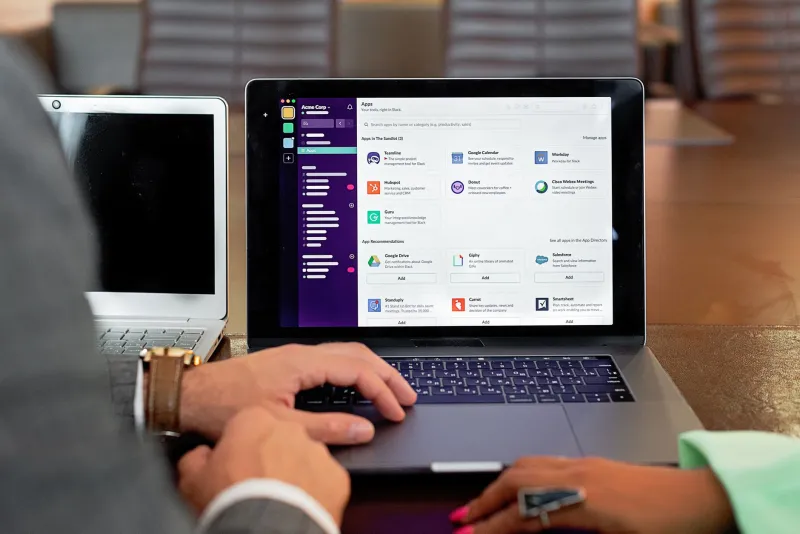
Somewhere in your team's Slack workspace right now, there's a conversation that changed everything. Maybe it was the thread where your lead engineer explained exactly why you moved away from a microservices approach. Maybe it was the back-and-forth where someone finally articulated why that third-party API kept causing timeouts. It happened. It was real. And there's a decent chance nobody on your team can actually find it anymore.
This isn't a knock on Slack, Teams, or Discord. These tools are genuinely useful — they've made remote and hybrid work possible for millions of developers across the country. But there's a quiet cost that most engineering teams aren't accounting for, and it compounds in ways that only become obvious when something goes wrong.
The Illusion of a Searchable Record
Here's the thing about async messaging tools: they give you the feeling of documentation without any of the actual benefits. Everything is technically logged. You can search it. It's all there — in theory.
In practice, critical technical decisions are scattered across a dozen channels, buried under memes, emoji reactions, and status updates. The signal-to-noise ratio is brutal. And when a new developer joins your team and asks "hey, why do we do it this way?", the answer "check Slack" is essentially the same as saying "good luck."
Worse, the people who were in that original conversation often remember the conclusion but forget the reasoning. And reasoning is everything. Knowing what your team decided is far less valuable than understanding why — especially six months later when the context that made that decision sensible has completely changed.
When Async Goes Wrong, It Goes Really Wrong
Let's be honest about how most technical discussions actually unfold in Slack. Someone drops a question in a channel. A few people respond over the next couple of hours. Someone shares a code snippet. There's a tangent. Someone reacts with a 👀. The thread gets 23 replies, and by the end, three different people have proposed three different solutions, nobody has explicitly agreed on one, and the original question is technically "answered" without anything actually being resolved.
Then it happens again. Two months later, a different developer asks the same question. The cycle repeats. The team burns time re-litigating decisions that were already made — they just weren't made clearly or durably.
This is how institutional knowledge quietly evaporates. Not dramatically, not all at once, but one buried thread at a time.
The Real Problem Isn't the Tool
It's tempting to blame the platform, but the platform isn't the issue — the workflow around it is. Most engineering teams have never explicitly decided what kinds of conversations belong in Slack versus what should live somewhere more permanent. Everything defaults to the chat window because it's fast and frictionless.
And fast is great, until fast means you're making the same architectural mistake your team already solved eighteen months ago because nobody captured the lesson.
The distinction that matters is between ephemeral coordination and durable knowledge. "Hey, can you review my PR this afternoon?" — that's ephemeral. It doesn't need to outlive the day. "We're switching our caching strategy because Redis was causing these specific issues under load" — that's durable knowledge, and it deserves a home that isn't a timestamped message in #backend.
Practical Ways to Stop Losing the Good Stuff
Establish a "decision log" habit. It doesn't have to be fancy. A shared doc, a Notion page, a Confluence entry — whatever your team already uses. The rule is simple: if a Slack conversation resulted in a technical decision, someone summarizes it in the log before the thread dies. Even three sentences is infinitely better than nothing.
Designate a channel just for decisions. Some teams find it useful to have a low-traffic, high-signal channel — something like #decisions or #architecture-log — where the outcome of important discussions gets posted, even if the discussion itself happened elsewhere. It becomes a lightweight index of what your team has figured out.
Build a "thread-to-doc" reflex. When a Slack thread gets long — say, more than ten replies touching a real technical question — someone on the team should flag it. Not to shame anyone, but to say: "This conversation is too important to stay here. Let's move it somewhere it can breathe." A short async call, a shared doc, a proper RFC — anything that gives the content room to be understood rather than just scrolled past.
Make onboarding the test. Ask yourself: if a brand-new engineer joined your team tomorrow, how much of your team's reasoning could they access without pinging someone? If the honest answer is "almost none," that's your signal. New hires shouldn't have to reconstruct your team's history from chat logs.
Normalize the "why" comment. This one's low-effort but high-value. When someone makes a decision in code — a weird workaround, an unusual dependency choice, a specific config value — leave a comment that links to the relevant conversation or just explains the reasoning inline. Future teammates (including future you) will be grateful.
Async Isn't the Enemy — Passivity Is
None of this means you should abandon async communication. That flexibility is genuinely valuable, and plenty of great engineering work happens in Slack threads every day. The issue isn't the medium — it's the assumption that because a conversation happened, the knowledge from it has been preserved.
It hasn't. Not automatically. Knowledge preservation requires intention.
The teams that get this right aren't the ones with the fanciest tooling or the most elaborate wiki structures. They're the ones where someone has made it a habit — even a slightly annoying, slightly tedious habit — to take what happened in the chat and put it somewhere that lasts.
Your team is having smart conversations. The question is whether those conversations are growing your collective understanding, or just disappearing into the scroll.
Right now, somewhere in your Slack, someone is explaining something important. What happens to that explanation next is entirely up to you.